Pot Roast Soup
- Makes 8
- Prep 5 minutes
- Cook 15 minutes
- Total 20 minutes
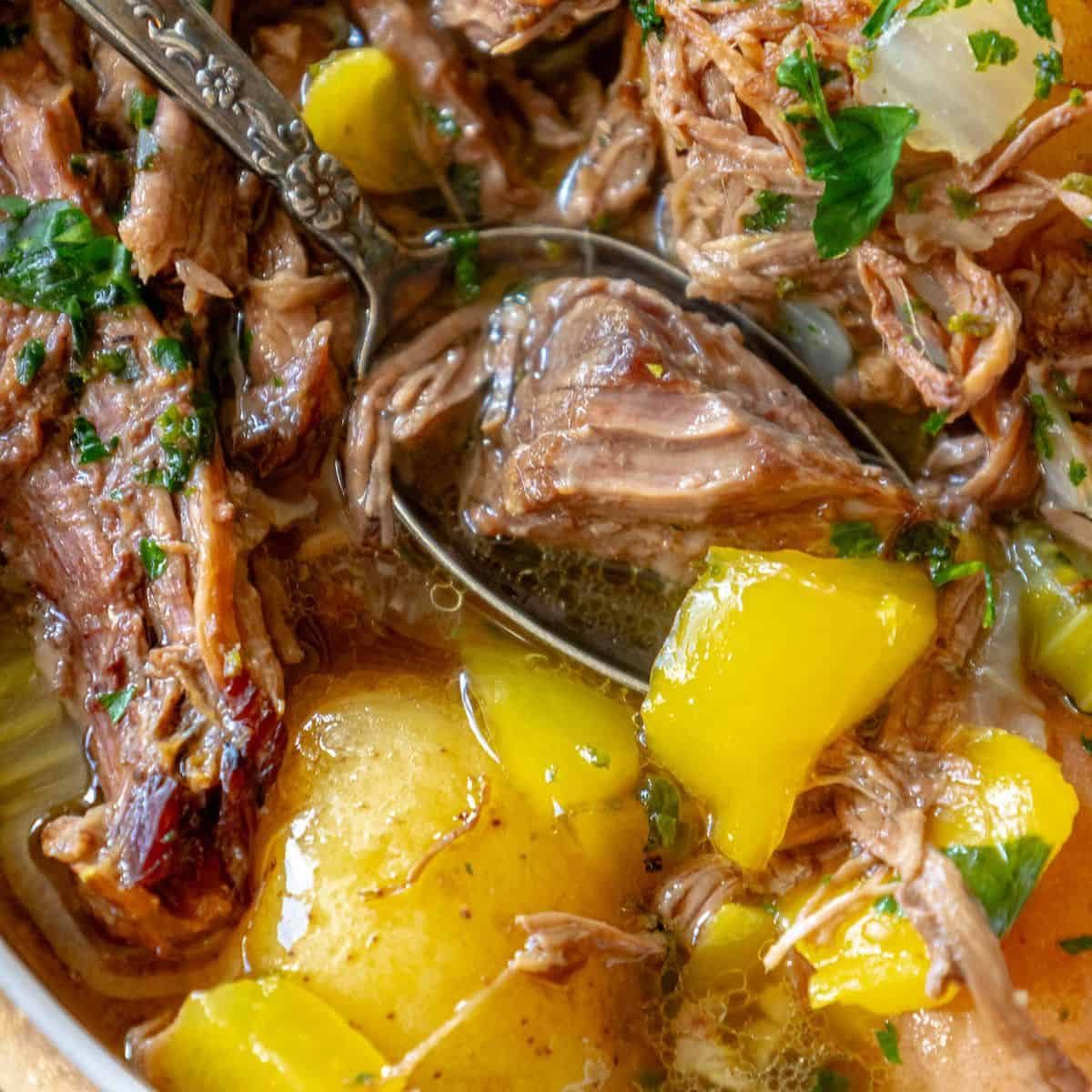
We make pot roast all the time for our family – it is one dinner everyone in our house eats over and over, without complaints. Since we try to get chuck roast from Costco, we always have tons and tons of leftover pot roast – and this Pot Roast Soup is our all time favorite way to use all the extras up!
This is one soup that is hearty, packed with vegetables, and will keep even your hungriest eaters full – its one our teen son loves!
At Avdaye, we add lots of tips in all of our recipes – because we are a home cook without any formal training, and we find we are more confident making dishes when we understand why it works, and what each ingredient means to the flavor of a recipe. Our goal is for even the most beginner home cook to feel empowered in the kitchen.
What stands out
- Packed with hearty vegetables and potatoes for a filling, well-rounded meal
- It's the solid way to turn leftover pot roast into an entirely new, comforting meal
- Ready in about 20-25 minutes, making it a great weeknight dinner even on busy days
- One pot, minimal cleanup, and it feeds a hungry crowd
- This recipe is solid from leftovers from our solid Pot Roast and Potatoes or our Pickle Pot Roast recipe!
How to Make Pot Roast Stew
To make this recipe, we will need the following ingredients:
- Leftover Pot Roast: This is the star of the show. Leftover pot roast adds tender and flavorful chunks of beef to the soup, making it hearty and satisfying.
- Bell Pepper: Diced bell pepper adds a pop of color and a slightly sweet and crisp texture to the soup. It also contributes to the overall flavor profile.
- Onion: Diced onion brings a savory and aromatic element to the soup. It's a common base ingredient in many soups and provides a nice depth of flavor.
- Celery: Diced celery adds a refreshing and slightly earthy crunch to the soup. It's a classic component in soups and complements the other ingredients.
- Beef Stock: Beef stock is the liquid base of the soup. It provides a rich, savory flavor that pairs perfectly with the beef from the pot roast. It's the foundation of the soup's broth.
- Water: Water is used to dilute the beef stock and achieve the desired consistency for the soup. It ensures that the flavors are balanced and not overly concentrated.
- Parboiled Creamer Potatoes: These potatoes are partially cooked before adding them to the soup, which helps them maintain their shape and texture during the simmering process. They add a creamy and starchy element to the soup, making it more substantial.
Leftover Pot Roast Soup Instructions Step By Step
Once you've gathered your ingredients, we will use the following process:
Parboil Potatoes
Parboil potatoes to tender when pressed with a fork, drain well, and set aside.
Brown Vegetables
In a large, heavy stock pot or dutch oven, add diced vegetables to pan and salt generously. Brown until soft and lightly browned, stirring occasionally, about 8 minutes. Add a little olive oil if not using a nonstick pot.
Make Soup
Stir in leftover pot roast and potatoes, as well as herbs, garlic salt, and stock.
Add water so that liquid covers soup, add more if needed.
Bring to rapid boil, stirring to prevent sticking.
Serve & Enjoy!
Lower heat and let simmer until serving.
Kitchen notes
Start with a Good Pot Roast: The key to a flavorful pot roast soup is a well-cooked pot roast. Ensure your pot roast is tender and well-seasoned. You can use leftover pot roast from a previous meal or cook a fresh roast specifically for the soup.
Use Homemade Beef Broth: If possible, use homemade beef broth for your soup. It will add a rich and deep flavor that store-bought broth may lack. You can make beef broth by simmering beef bones, vegetables, and herbs for several hours.
Sauté Vegetables: Sautéing onions, garlic, and other vegetables in a little oil or butter before adding them to the soup pot enhances their flavor. It's a crucial step for building depth in the soup.
Add Fresh Herbs: Fresh herbs like thyme, rosemary, and parsley can elevate the flavor of your pot roast soup. Add them near the end of the cooking process to preserve their freshness.
Deglaze the Pan: If you cooked your pot roast in a skillet or Dutch oven, deglaze the pan with a bit of wine or broth after removing the roast. Scrape up any browned bits from the bottom of the pan, as they are full of flavor, and then add this to your soup.
Simmer Slowly: Allow your pot roast soup to simmer slowly over low heat. This long, slow simmer helps meld the flavors and tenderize any remaining meat.
Taste and Adjust: Taste your soup before serving and adjust the seasoning as needed. You may need to add more salt, pepper, or herbs to achieve the desired flavor.
Add Vegetables Wisely: If you're adding vegetables like potatoes or carrots, add them early in the cooking process so they have time to soften. More delicate vegetables like peas or green beans can be added later to retain their texture.
Parboil potatoes. This recipe comes together quickly, so there is not enough cook time to soften potatoes. Use potatoes cooked with pot roast, or parboil potatoes to soft before adding to stew.
Incorporate Leftover Gravy: If you have leftover gravy from your pot roast, consider adding it to the soup. It will add thickness and richness to the broth.
Serve with Fresh Bread: A warm loaf of crusty bread or dinner rolls is the solid accompaniment to pot roast soup. It's great for dipping and sopping up the good broth.
Garnish Creatively: Sprinkle fresh herbs, grated cheese, or a dollop of sour cream on top of each bowl to add visual appeal and extra flavor.
Leftover Pot Roast Stew FAQs
Can we use leftover pot roast for this soup?Yes, using leftover pot roast is a great way to make pot roast soup. shred or chop the leftover roast and incorporate it into the soup during the cooking process.
What type of meat is ideal for pot roast soup?Chuck roast or bottom round roast are excellent choices for pot roast soup. These cuts are well-suited for slow cooking and become tender and flavorful.
Can we make pot roast soup in advance?Yes, pot roast soup can be made in advance and reheated when you're ready to serve. In fact, like many soups, it often tastes even better the next day as the flavors have had more time to meld.
Can we freeze pot roast soup?Yes, pot roast soup is freezer-friendly. Allow it to cool completely before transferring it to airtight containers or freezer bags. leave some space for expansion, seal tightly, and label with the date. It can be frozen for several months.
Can we customize the vegetables in pot roast soup?Absolutely! You can customize the vegetables to your liking. Common additions include potatoes, carrots, celery, and peas. Add them based on your preferences and what you have on hand.
Can we use homemade beef broth?Yes, homemade beef broth or stock can be used if you don't have store-bought broth available. Homemade broth often adds a richer and more complex flavor to the soup, but store-bought saves time.
Can we thicken pot roast soup?If you prefer a thicker soup, you can thicken it with a slurry made from cornstarch and cold water. Mix equal parts cornstarch and water until smooth, then stir it into the simmering soup until it thickens to your desired consistency.
What are some common garnishes for pot roast soup?Common garnishes for pot roast soup include chopped fresh herbs (parsley, thyme, or rosemary), grated cheese (Parmesan or cheddar), a dollop of sour cream, or croutons for added texture.
Can we make pot roast soup in the slow cooker?Yes, you can make pot roast soup in a slow cooker. Follow the same basic steps of sautéing vegetables and searing the meat before transferring everything to the slow cooker. Cook on low for 6-8 hours or until the meat is tender.
Can we add pasta or rice to pot roast soup?Yes, you can add pasta or rice to pot roast soup to make it heartier. Cook the pasta or rice separately and add it to the individual bowls before serving to prevent it from becoming mushy in the soup.
Keeping leftovers
Store leftover pot roast soup in an airtight container in the fridge for up to 4 days. The flavors deepen as it sits, making leftovers as good, if not better, the next day.
To freeze, let the soup cool completely, then store in a freezer-safe container for up to 3 months. Note that potatoes can change texture slightly after freezing, so for the best texture, consider adding fresh potatoes when reheating instead of freezing them in the soup. Thaw overnight in the fridge and reheat gently on the stovetop over medium-low heat.
Pot Roast Soup Variations to Try
- Pot Roast Soup with Rice or Pasta – stir in cooked rice or egg noodles for a heartier, more filling bowl
- Creamy Pot Roast Soup – stir in a splash of heavy cream or a spoonful of sour cream at the end for a richer, creamier broth
- Extra Veggie Pot Roast Soup – add carrots, green beans, or corn along with the bell pepper and celery for more variety
- Slow Cooker Pot Roast Soup – combine all ingredients in a slow cooker and cook on low for 4-5 hours for a hands-off version
Ingredients
- 1 pound leftover pot roast, shredded or cut into small chunks
- 1 bell pepper, diced
- 1 onion, diced
- 4 stalks celery, diced
- 28 oz beef stock
- 2 cups water
- 1 tablespoon Italian herbs seasoning
- 1 tablespoon garlic salt
- 2 pounds parboiled creamer potatoes
Method
- In a large, heavy stock pot or dutch oven, add diced vegetables to pan and salt generously. Brown until soft and lightly browned, stirring occasionally, about 8 minutes.
- Add the beef stock, water, and any reserved gravy from the pot roast, adding a bit more water if needed so the liquid covers the ingredients. If using raw, un-parboiled potatoes instead of parboiled creamer potatoes, dice them small and add 10-15 extra minutes of simmer time until fork-tender.
- Add water so that liquid covers soup, add more if needed.
- Bring to rapid boil, stirring to prevent sticking.
- Lower heat and let simmer until serving.