Pie Crust
- Makes 2
- Prep 15 minutes
- Cook 2 hours
- Total 2 hours
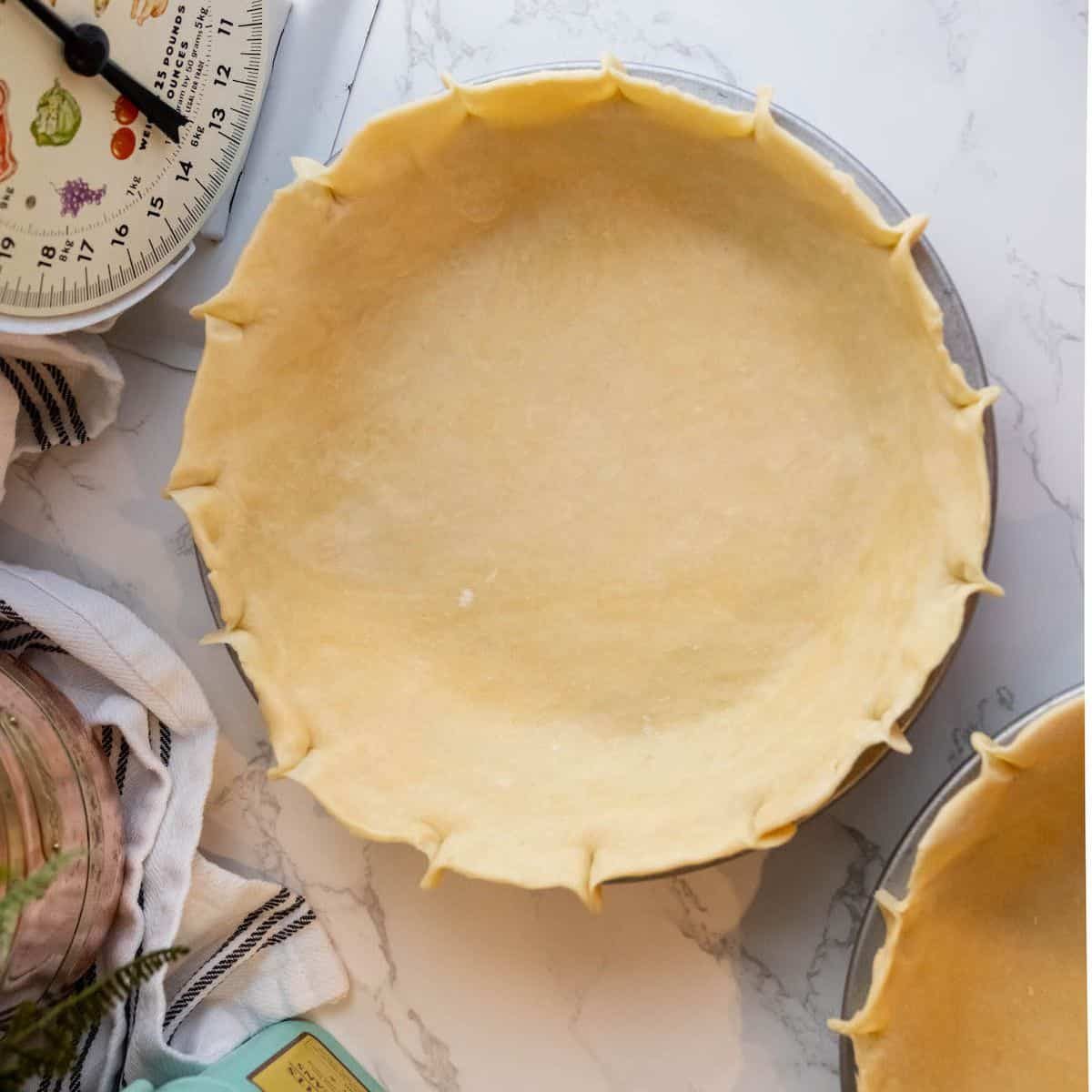
The holiday season always means good, fresh-baked pies for us in our house—and instead of relying on store-bought pie crust, we reach for this tried-and-true Easy Pie Crust recipe for a solid crust that tastes a million times better than the premade kind from the store!
This pie crust is great to use instead of store-bought in our Apple Pie Bars recipe or Cranberry Apple Pie!
At Avdaye, we add lots of tips in all of our recipes – because we are a home cook without any formal training, and we find we are more confident making dishes when we understand why it works, and what each ingredient means to the flavor of a recipe. Our goal is for even the most beginner home cook to feel empowered in the kitchen.
How to make Pie Crust
This pie crust is simple to mix – keep your butter cold, for best results. Work quickly, and cut butter to help mix well without warming it.
From-Scratch Pie Crust Ingredients
First you will need to assemble the following ingredients:
- All-purpose flour (2 ½ cups) – All-purpose flour is a versatile milled wheat flour with a balanced protein content, suited perfectly for a flakey pie crust.
- Sea salt (½ tsp) – sea salt is a naturally sourced salt with a small, uniform particle size, offering a quick dissolve and even distribution in dishes, it is necessary to season the pie crust.
- Sugar (1 tbsp) – you can add sugar if you want to make a sweet crust otherwise omit this ingredient.
- Unsalted butter (1 cup) – The butter must be cold, its best to cut up into cubes then freeze it for about 10 minutes before starting the crust.
- Ice water (6-8 tbsp) – ice cold water will help the butter and flour come together. We usually fill a glass with ice then pour in some water before starting the recipe so its ice cold by the time we need it.
Steps to Make Pie Crust From-Scratch
We're showing how to make pie crust with a food processor, but there are directions to make it by hand below.
Pulse Flour and Salt
Add the flour and salt (sugar if using) to the food processor, pulse to combine.
Add Butter
Scatter the butter cubes in the flour, and toss them a bit to coat them in flour so they don't stick together.
Pulse the mixture in the food processor about 15 seconds until dough looks like course bread crumbs.
Push Dough Together
Turn the food processor on and add the ice cold water 1 tablespoon at a time through the feed tube on the top.
Pour the mixture out onto a clean surface and push the dough together and work it into a ball.
Shape Dough & Chill
Cut in two and shape dough into flat discs about the size and thickness of hockey pucks.
Wrap in plastic wrap and refrigerate for at least an hour before rolling out. You can refrigerate it for up to 2 days or freeze it at this point.
Roll Out to Use
When you're ready, roll pie crust out and bake as called for in recipe!
How to Make Pie Crust Dough by Hand (Without Food Processor)
- Combine the flour and salt (plus sugar if using) in a large bowl. Add the cold butter and using a fork or pastry cutter combine until you get a coarse mealy texture like bread crumbs.
- Add 4 tbsp of water and work into the dough, then add more as needed until you can bring the dough together and knead for a minute or two till it comes together.
- Cut into two pieces and shape dough into flat discs about the size and thickness of hockey pucks.
- Wrap each piece of dough in foil and refrigerate at least an hour before rolling out. You can refrigerate it for up to 2 days or freeze it at this point.
How to Roll Out and Use Pie Crust Dough
Roll Out and Put in Pie Pan
Remove the dough discs and roll each out to the thickness of a pound coin or quarter with a rolling pin on a lightly floured surface.
Roll the dough into the pie pan and gently press into the dish.
Trim the excess pastry around the edge, leaving ½ inch past the edge of the dish, using a knife or scissors.
Crimp & Bake!
Crimp the dough by pinching it firmly every ½ inch all the way around.
Take a fork and prick the crust all the way around (this will help prevent air bubbles from forming)
Fill one crust and top with the other or roll both out and bake as directed.
Kitchen notes
Cold Ingredients: Start with cold butter, and even consider chilling your flour beforehand. Cold ingredients prevent the butter from melting too early, resulting in a flakier crust.
Avoid Overworking: Handle the dough as little as possible. Overworking can activate the gluten too much, leading to a tough crust.
Pea-sized Butter Chunks: When cutting in the butter, leave some pea-sized chunks. These melt during baking and create steam, leading to a flaky texture.
Water Amount: Add water slowly and enough to bring the dough together. Too much water can make the crust tough.
Rest and Chill: Once your dough is made, wrap it in plastic and let it rest in the refrigerator for at least an hour. This relaxes the gluten and solidifies the butter.
Roll Evenly: When rolling out the dough, ensure even thickness for consistent baking.
Blind Bake: If your filling is wet or cooks quickly, consider blind baking (pre-baking) your crust with pie weights to ensure the bottom isn't soggy.
Egg Wash: Brush the top of your crust with a beaten egg or egg wash mixture (egg with a bit of water or milk) for a golden and shiny finish.
Edges: To prevent the edges of the pie from browning too quickly, you can cover them with aluminum foil or a pie shield.
Stay Patient: Allow the pie to cool adequately before cutting. This lets the juices and fillings set, ensuring cleaner slices.
Practice: Like all baking, the more you practice, the better you get. So, don't be disheartened by initial hiccups.
From Scratch Pie Dough FAQs
Why is our butter pie crust tough?A tough crust usually results from overworking the dough, which activates the gluten. It's crucial to handle the dough gently and minimally.
Can we make our pie crust in advance?Absolutely! You can prepare the dough, wrap it tightly, and store it in the refrigerator for a few days or freeze it for up to a month. ensure it's defrosted in the fridge before rolling it out.
Why is it essential to keep everything cold?Cold butter creates steam when baked, leading to flaky layers in the crust. If the butter melts prematurely, the crust can become dense.
What if we don't have a pastry cutter or food processor?You can use two knives in a criss-cross motion or even your fingers to break the butter into the flour, but work quickly to avoid warming the butter. We love this food processor and this pastry cutter, they are great kitchen tools to have around.
Our crust shrinks when baked. Why?The dough should come together when pinched. If it's too crumbly, add a little more water; if it's too sticky, you may have added too much.
Why is blind baking necessary?Blind baking, or pre-baking the crust without filling, is crucial for pies with a wet filling or a filling that bakes quickly. It ensures the bottom crust isn't soggy.
What's the best way to store baked pie crust?Once baked and cooled, keep it at room temperature if using within a day. For longer storage, wrap it tightly and refrigerate.
Can we use salted butter?While unsalted butter is preferred for precise control over salt content, you can use salted butter—adjust or eliminate any added salt in the recipe.
Good Pie Recipes for your Crust
Share Pin It FollowIngredients
- 2 ½ cups all-purpose flour
- ½ tsp fine sea salt
- 1 tbsp sugar, if you want a sweet crust
- 1 cup unsalted butter, cut into ½ inch cubes, cold
- 6-8 tbsp ice water
Method
- Add the flour and salt (sugar if using) to the food processor, pulse to combine.
- Scatter the butter cubes in the flour, and toss them a bit to coat them in flour so they don't stick together.
- Pulse the mixture in the food processor about 15 seconds until dough looks like course bread crumbs.
- Turn the food processor on and add the ice cold water 1 tablespoon at a time through the feed tube on the top.
- Pour the mixture out onto a clean surface and push the dough together and work it into a ball. Cut in two and shape dough into flat discs about the size and thickness of hockey pucks.
- Wrap in plastic wrap and refrigerate for at least an hour before rolling out. You can refrigerate it for up to 2 days or freeze it at this point. Proceed to "Rolling Out the Dough Section" if using the crust right away.
- Combine the flour and salt (plus sugar if using) in a large bowl. Add the cold butter and using a fork or pastry cutter combine until you get a coarse mealy texture like bread crumbs.
- Add 4 tbsp of water and work into the dough, then add more as needed until you can bring the dough together and knead for a minute or two till it comes together.
- Cut into two pieces and shape dough into flat discs about the size and thickness of hockey pucks.
- Wrap each piece of dough in foil and refrigerate at least an hour before rolling out. You can refrigerate it for up to 2 days or freeze it at this point. Proceed to "Rolling Out the Dough" section if using immediately.
- Remove the dough discs and roll each out to the thickness of a pound coin or quarter with a rolling pin on a lightly floured surface. You will want to roll it out so you can cover over the edge of the pie pan.
- Roll the dough into the pie pan and gently press into the dish.
- Trim the excess pastry around the edge, leaving ½ inch past the edge of the dish, using a knife or scissors.
- Crimp the dough by pinching it firmly every ½ inch all the way around.
- Take a fork and prick the crust all the way around (this will help prevent air bubbles from forming)
- Fill one crust and top with the other or roll both out and bake as directed.