Fattoush Salad
- Makes 4
- Prep 10 minutes
- Cook 8 minutes
- Total 18 minutes
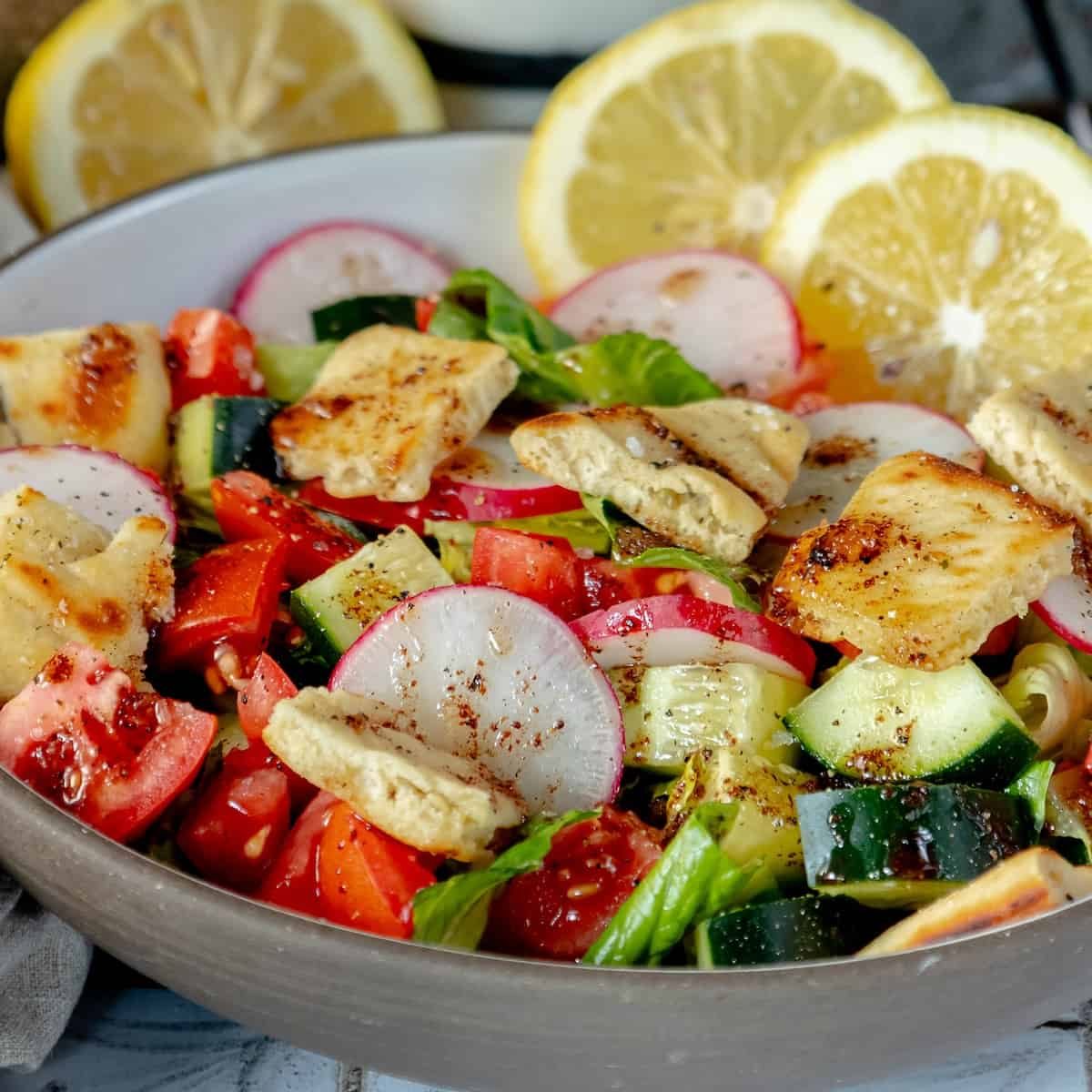
Fresh, crisp, and addictive – Fattoush is a traditional Lebanese salad of mixed vegetables and herbs tossed with crunchy toasted pita croutons and a bright, tangy sumac-lemon dressing. It takes about 20 minutes to put together, uses simple pantry and produce-drawer ingredients, and delivers more flavor per bite than almost any salad we've made!
We eat this at least once a week in summer, and we've been making it ever since we fell in love with it touring the far north of Israel – close enough to Lebanon to taste the real thing.
At Avdaye, we add lots of tips in all of our recipes – because we are a home cook without any formal training, and we find we are more confident making dishes when we understand why it works, and what each ingredient means to the flavor of a recipe. Our goal is for even the most beginner home cook to feel empowered in the kitchen.
What stands out
- Ready in 20 minutes. A handful of vegetables, a quick whisk of dressing, and a few minutes in the oven for the pita — that's it.
- One star ingredient makes it unforgettable. Sumac gives this salad a tangy, lemony depth that no other salad has. Once you taste it, you'll wonder why you've been making salads without it.
- Naturally vegan and vegetarian. No modifications needed — this is one of those rare salads everyone at the table can eat.
- Great for crowds. Double or triple the recipe easily and let guests serve themselves; it's casual and impressive at the same time.
- Uses up your garden produce. Cucumbers, tomatoes, herbs — if you're growing any of these, fattoush is the answer for what to do with all of it.
Quick Recipe Snapshot
Prep: 12 minutes | Cook: 8 minutes | Total: ~20 minutes Servings: 4 | Calories: ~363 per serving Diet: Vegan, Vegetarian, Dairy-Free Best for: Weeknight dinners, potlucks, BBQ sides, meal prep (components only), Mediterranean spreads
What Is Fattoush Salad? (A Little History)
Fattoush is one of Lebanon's most beloved salads – and one of the best examples anywhere of a “peasant dish” that outlasted the circumstances that created it. Lebanese farmers would take stale leftover pita bread, toast or fry it to give it new life, and toss it with whatever fresh vegetables they had growing. Nothing went to waste. The pita soaked up the dressing, softened enough at the edges while staying crunchy in the center, and transformed a handful of garden vegetables into something genuinely craveable.
What sets fattoush apart from every other bread salad in the world is sumac – a tangy, deep-red spice made from dried sumac berries that's been a cornerstone of Middle Eastern cooking for centuries. It has a flavor somewhere between lemon and vinegar, with a fruity undertone that brightens everything it touches. Fattoush spread from Lebanon across the whole Middle East, with each region adding its own spin, but sumac and toasted pita remain the constants that make it fattoush.
We first encountered fattoush from Lebanese restaurants in California, but truly fell in love with it in northern Israel at a restaurant owned by a Lebanese Christian family – when we were close enough to the border that the food, the olive oil, the herbs, and the spices were essentially identical to what you'd find across the line. We've been making versions of this salad ever since, adapting it for ingredients we can easily find in American grocery stores without losing what makes it special.
What Is Sumac – and Where to Buy It
Sumac is a coarsely ground, deep brick-red spice made from dried sumac berries. It has a bright, sour, slightly fruity flavor — like lemon juice in spice form, but with more complexity and a slightly earthy undertone. It's been used in Middle Eastern and Mediterranean cooking for centuries and is one of those ingredients that, once you start using it, you'll add to everything: hummus, grilled meats, roasted vegetables, eggs.
Where to find sumac:
- Middle Eastern or Mediterranean grocery stores (the most reliable source, often the best price)
- Whole Foods and Sprouts (usually in the spice aisle or international section)
- Trader Joe's (carries it seasonally)
- Online (Amazon, Burlap & Barrel, Penzeys)
Can we substitute something for sumac? If you truly can't find it, add extra lemon juice and a tiny pinch of lemon zest to the dressing. It won't be the same depth of flavor, but it will approximate the tartness. That said — sumac is worth tracking down. It's not expensive and it keeps for months. We also love it in hummustahini sauceand zhoug sauce.
Ingredients You'll Need
- Cucumbers – cool, crisp, and mild; they're the backbone of the salad's texture. Persian or English cucumbers work best as they're less watery than standard cucumbers.
- Tomatoes – juicy and slightly sweet; use ripe tomatoes at room temperature for the best flavor. Cherry tomatoes halved work beautifully here.
- Red onion – adds sharpness and bite. Thinly sliced and soaked in cold water for 10 minutes to take the edge off.
- Garlic – minced, for a subtle aromatic backbone in the dressing.
- Fresh parsley – lots of it. Parsley is structural here, not a garnish — it's one of the dominant flavors.
- Fresh mint – the ingredient that makes people ask “what is that flavor?” — bright, cooling, and distinctly Middle Eastern.
- Sumac – the star. Tangy, fruity, and irreplaceable (see above).
- Lemon juice – fresh only. Bottled lemon juice doesn't have the brightness this salad needs.
- Olive oil – a good-quality extra virgin olive oil; you'll taste it in the dressing.
- Salt and pepper – season generously; the vegetables need it.
- Romaine lettuce (optional) – adds bulk and an extra crunch layer.
- Radishes (optional) – peppery bite and a pop of color; highly recommended.
- Pita breads – the signature crouton. Torn into rough pieces, brushed with olive oil, and toasted until golden.
Full ingredient amounts are in the recipe card below.
How to make Fattoush Salad
Once you've gathered your ingredients, we will use the following process:
Prep Vegetables
In a large bowl, combine cucumbers, tomatoes, red onion, garlic, parsley, and mint. Add lettuce and radishes if using.
Make Croutons
Toast pita bread and make croutons – we like to grill or griddle them, but they can also be toasted in the air fryer, whatever works for you!
Mix Dressing
In a small bowl, whisk together lemon juice, olive oil, sumac, salt, and pepper.
Dress, Serve, & Enjoy!
Pour the dressing over the vegetables and toss well to combine.
Kitchen notes
Use the freshest produce you can find. This salad lives or dies by the quality of its vegetables. Peak-season summer tomatoes, crisp cucumbers, and fresh herbs make an entirely different dish than out-of-season equivalents.
Cut everything uniformly. Bite-sized, similar-sized pieces mean every forkful gets a little of everything. Uneven cuts lead to uneven bites.
Be generous with the herbs. Parsley and mint aren't garnish here — they're structural flavor. Don't skimp.
Season the dressing boldly. The sumac and lemon should be upfront and assertive. If the dressing tastes aggressive on its own, it will taste solid once it coats the vegetables.
Don't skip the sumac. It's what makes this fattoush, not a pita-bread vegetable salad.
How to Make Fattoush Ahead of Time
Fattoush doesn't hold once assembled – but the components prep beautifully ahead of serving:
- Vegetables: Dice cucumbers, tomatoes, and radishes up to 24 hours ahead. Store in separate airtight containers in the refrigerator.
- Red onion: Soak, drain, and store in the fridge up to 24 hours ahead.
- Herbs: Chop parsley and mint up to a day ahead; store wrapped in a damp paper towel in the fridge.
- Dressing: Whisk and refrigerate up to 3 days ahead. Re-whisk before using.
- Pita croutons: Toast the day you're serving. Store at room temperature in an open bowl (not sealed, which creates steam and softens them).
- Assembly: Combine everything and dress right before serving — and add the pita at the absolute last minute.
Fattoush Salad Recipe Variations
Add a protein: Grilled chicken (try chicken shawarma sliced over the top), pan-seared shrimp, or crispy falafel turn this into a complete meal.
Add cheese: Crumbled feta or halloumi (grilled until golden) adds a salty, creamy element that plays beautifully against the tart dressing.
Add chickpeas: For a vegan protein boost, toss in a can of drained, rinsed chickpeas.
Gluten-free: Use gluten-free pita bread, or substitute tortilla chips, rice crackers, or skip the bread and serve the salad over a grain like farro or bulgur.
Swap the vegetables: Bell peppers, avocado, corn, or pomegranate arils are all great additions. In fall, try diced roasted butternut squash.
Pomegranate molasses dressing: Replace half the lemon juice with pomegranate molasses for a sweeter, deeper dressing — a common variation in Lebanese households.
Fattoush Salad Recipe FAQs
What is Fattoush Salad?Fattoush is a traditional Lebanese bread salad made with mixed fresh vegetables, herbs, toasted pita croutons, and a tangy sumac-lemon dressing. It originated as a peasant dish – a way to use up leftover stale pita with whatever fresh garden vegetables were on hand.
What makes fattoush different from other salads?Two things: sumac and toasted pita. Sumac gives the dressing a uniquely tangy, fruity flavor you can't get from lemon juice alone, and the pita croutons add a crunchy, toasty element that's completely different from any other salad component.
Can we make fattoush ahead of time?Yes, with the right prep strategy. Make and refrigerate all the vegetables, herbs, and dressing separately up to 24 hours ahead. Toast the pita the day of. Assemble and dress right before serving.
is fattoush healthy?Yes – it's loaded with fresh vegetables, herbs, and heart-healthy olive oil. One serving is around 363 calories, most of it from the olive oil and pita. Use whole wheat pita and go lighter on the oil to reduce calories.
How do we store leftover fattoush?Dressed fattoush doesn't store well – the pita gets soggy quickly. If you have components left over, keep the dressing and pita separate from the vegetables and combine fresh for the next serving. Dressed salad will keep in the fridge for a day but will be significantly softer.
Is fattoush vegan/vegetarian?Yes – the classic version is completely vegan and vegetarian. Feta or chicken are optional additions, not part of the traditional recipe.
What dishes pair well with fattoush?Fattoush pairs well with a variety of Middle Eastern dishes, such as hummus, baba ganoush, grilled meats, and kebabs.
Can we use tortillas instead of pita?Yes – flour tortillas make decent stand-in croutons. Cut them into strips or triangles, brush with olive oil, and toast until crispy. They won't have the same chew as pita, but they work in a pinch.
What's the difference between fattoush and tabbouleh?Both are classic Lebanese salads heavy on fresh herbs. Tabbouleh is based on bulgur wheat with a heavy parsley presence; fattoush is vegetable-forward with toasted pita bread croutons and sumac dressing. They're a great pair served together.
- Easy Hummus Recipe
- Tahini Sauce
- Zhoug (Skhug) Sauce
- Easy Falafel Balls
- The Best Easy Tabbouleh Recipe
- Vegan Sabich
- Vegan Sabich Bowls
- Easy Chicken Shawarma Pitas
- Chickpea Pomegranate Salad
- Tahini Roasted Cauliflower
Ingredients
- 2 medium cucumbers, diced
- 4 medium tomatoes, diced
- 1 red onion, thinly sliced
- 2 cloves of garlic, minced
- 1 cup of chopped fresh parsley
- ½ cup of chopped fresh mint
- 2 tablespoons of sumac
- Juice of 2 lemons
- ⅓ cup of olive oil
- Salt and pepper, to taste
- 2 cups of lettuce, chopped (optional)
- 1 cup of radishes, sliced (optional)
- 2 pita breads, toasted until golden and broken into pieces
Method
- Preheat oven, air fryer, or grill to 350 degrees.
- Chop pitas into small squares and lightly brush with olive oil, season with salt and pepper.
- Toast pita croutons 5-8 minutes, until crunchy. Remove and let cool.
- In a large bowl, combine cucumbers, tomatoes, red onion, garlic, parsley, and mint. Add lettuce and radishes.
- In a small bowl, whisk together lemon juice, olive oil, sumac, salt, and pepper.
- Pour the dressing over the vegetables and toss well to combine.
- before serving, add the toasted pita pieces and toss gently.
- Serve immediately, garnished with extra sumac if desired.