Vegan Sabich Bowls
- Makes 8
- Prep 20 minutes
- Cook 15 minutes
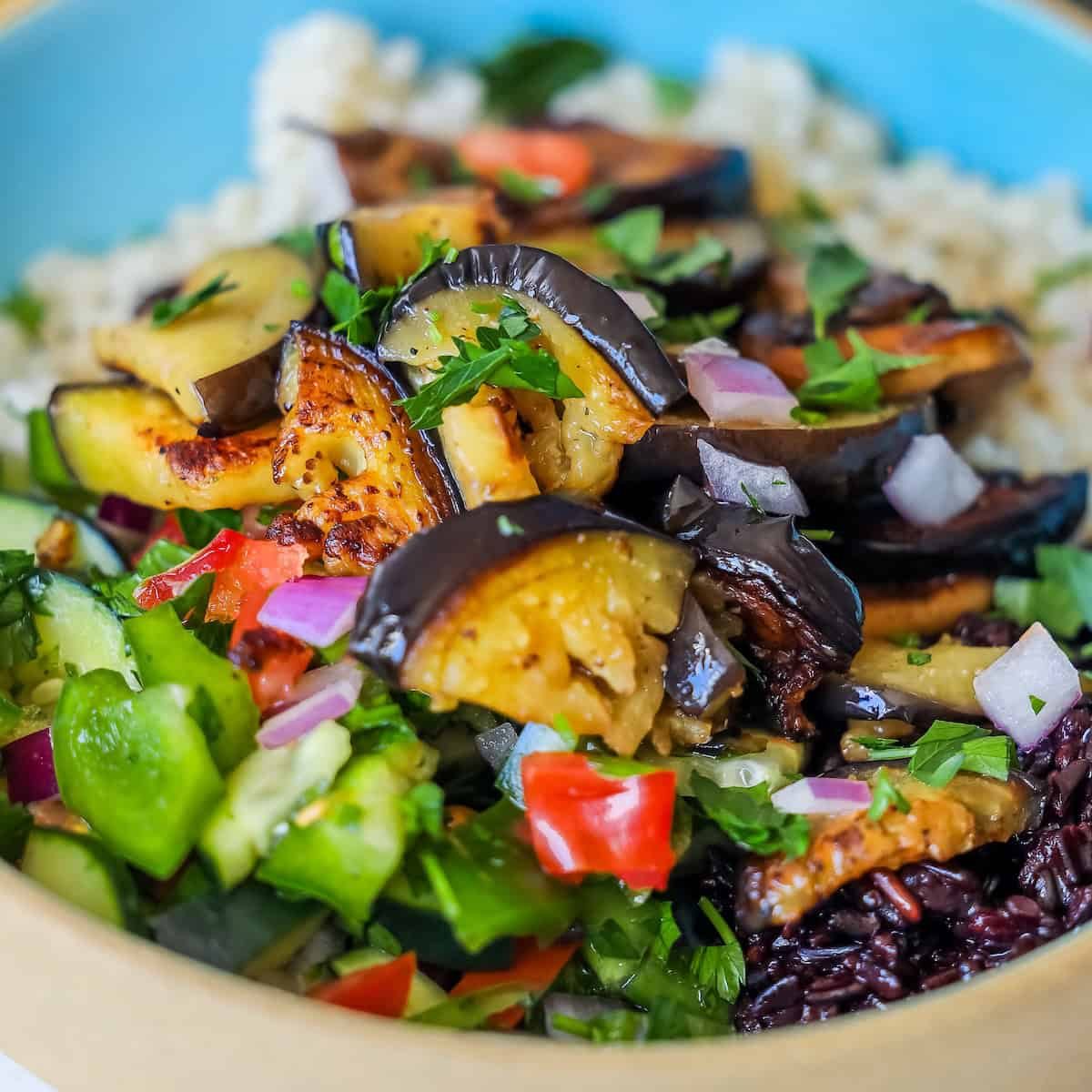
During Lent, we eat vegan for the entire period (we're Greek Orthodox, we fast by abstaining from meat, dairy, olive oil and wine on most days until Pascha) – and as spring wears on, we have to get creative with vegan dinners. Our family loves when we make our Vegan Sabich – and recently, we've been making big batches of these Vegan Sabich Bowls for us to dig into, loaded with fried eggplant and mushrooms Israeli Saladalong with couscous and rice.
This dish, inspired by our favorite Iraqi-Israeli street food, is packed with flavor and filling – it is one you will crave again and again!
At Avdaye, we add lots of tips in all of our recipes – because we are a home cook without any formal training, and we find we are more confident making dishes when we understand why it works, and what each ingredient means to the flavor of a recipe. Our goal is for even the most beginner home cook to feel empowered in the kitchen.
How to Make Vegan Sabich Bowls
These good vegan bowls are simple to make – and consist of mostly prep, outside of frying the eggplant and mushrooms.
Vegan Sabich Bowl Ingredients
To make this recipe, we will need the following ingredients:
- 2 Medium Eggplants: The star of sabich! Roasted or sautéed eggplant brings a meaty, tender texture and a rich, slightly smoky flavor that anchors the dish.
- 8 oz Cremini Mushrooms, Sliced: Add umami depth and a savory, hearty bite. They complement the eggplant and enhance the “satisfying” feel of the bowl.
- 2 Tomatoes: Bring brightness, juiciness, and a fresh acidity that balances the richness of the eggplant and mushrooms.
- 1/2 Red Onion, Diced: Adds sharpness and crunch with a pop of color. It cuts through the softer textures and boosts the overall flavor.
- 1 Cucumber, Diced: Offers a refreshing, cool crunch that contrasts beautifully with the warm ingredients and spices.
- 1 Bell Pepper, Diced: Adds sweetness, color, and a juicy crunch, boosting both flavor and visual appeal.
- 3 tbsp Avocado or Olive Oil: Used for roasting and flavor. Both oils help tenderize vegetables and enhance richness, with avocado oil being especially good for high-heat cooking.
- 1 tsp Greek Seasoning: Adds herbaceous, zesty flavor (usually includes oregano, garlic, onion, parsley, and lemony notes). It ties the veggies together with Mediterranean flair.
- 1 tsp Za'atar: A bold, fragrant Middle Eastern spice blend (usually thyme, sesame seeds, sumac, and salt). Adds herby, nutty, slightly tangy flavor—good on roasted eggplant or veggies.
- 1/2 tsp Sumac: A tangy, lemony spice that brightens the entire bowl. Suited to sprinkling over finished dishes for a fresh pop of acidity.
- 1 cup Rice (rinsed & cooked): A grounding base, providing comfort, satiety, and a soft contrast to the other textures.
- 1 cup Couscous (pearl or small, cooked): Adds a slightly chewy texture and nutty flavor. It also soaks up dressing or sauces beautifully and complements the rice for a grain mix with variety.
- 1/2 cup Hummus: Creamy, rich, and earthy, hummus adds body and protein to the bowl. It balances out the acidity and spice, makes the dish more filling, and gives each bite a velvety texture.
- 1–2 tablespoons Tahini Sauce: Nutty, smooth, and slightly tangy, tahini sauce brings a toasty depth and silkiness that ties everything together. It also enhances the roasted flavor of eggplant and mushrooms beautifully.
- Amba Sauce (to garnish): This tangy, spiced pickled mango sauce adds bold, savory-sour flavor with a touch of sweetness and heat. It gives the dish a true sabich authenticity and makes the flavors pop.
- Zhoug Sauce (to garnish): Herby, spicy, and fresh, zhoug is made with cilantro, green chili, garlic, and spices. It brings a vibrant kick and aromatic heat that cuts through the richness and brings balance.
Vegan Sabich Bowl Method
Once you've gathered your ingredients, we will use the following process:
Prep Ingredients
Wash and chop all vegetables – dice onion, bell pepper, cucumber and tomatoes for Israeli salad; wash eggplant and cut into thin slices, wipe away any dirt from mushrooms. Rinse rice.
Pan Fry Mushrooms
In a medium sized pan, add 1 1/2 tablespoons olive oil and heat until shimmery.
Add mushrooms and cook until browned, flipping occasionally, about 6 minutes.
Can also roast at 400 degrees in oven for about 15 minutes.
Fry Eggplant
Remove mushrooms from pan and set aside. Add rest of olive oil, heat, then fry eggplant slices until browned – about 8 minutes.
Can also be roasted at 400 degrees F in the oven for 15-20 minutes.
Make Israeli Salad
Toss chopped vegetables for Israeli salad, season with olive oil, salt and pepper, and sumac to taste.
Add Rice & Couscous
Assemble bowls by first layering cooked rice and couscous.
Add Hummus & Salad
Add a spoonful of hummus to the bottom of the bowl, and layer Israeli Salad on top.
Top With Eggplant, Mushrooms & Sauce
Top with fried eggplant, mushrooms, fresh chopped parsley, and tahini sauceamba sauce, or zhoug sauce for even more flavor!
Kitchen notes
Bake or Pan-Fry. This recipe is designed to be good two ways – either baked, with less oil for an even healthier dish – or with pan-fried eggplant and mushrooms for a richer, more indulgent vegan dish. Both are good – it is entirely up to you which way you brown your mushrooms and eggplant!
Add Hardboiled Egg. If you're not vegan or fasting, and want a bit more protein, add sliced hard-boiled egg to your bowl for a more authentic Israeli dish (Sabich is served with hard-boiled eggs in Israel unless ordered without.)
Use Small Couscous. For a different texture, try using small (Moroccan Style) couscous following our tips for solid fluffy couscous.
Salt the Eggplant: After cutting the eggplant, sprinkle it with salt and let it sit for 20–30 minutes before roasting. This draws out bitterness and extra moisture, making the texture creamier and flavor deeper.
Use High-Heat Oil for Roasting: Avocado oil or high-quality olive oil works great. Roast the eggplant and mushrooms at a high temp (400–425°F) for caramelized edges and a rich, almost smoky flavor.
Mix Grains for Texture: Combining couscous and rice gives a satisfying base—fluffy, chewy, and comforting. You can use quinoa or bulgur for variety, or skip grains and go full veggie if you're low-carb.
Prep Israeli Salad Fresh: Make the salad before serving for the crispest texture and brightest flavor. A squeeze of lemon and a dusting of sumac make it sing. We like to prep our salad as our eggplant is frying, so it's extra crisp and cool.
Don't Skip the Sauces! Sabich bowls, like eating sabich in Israelare all about the condiments. The combo of creamy hummusnutty tahinitangy ambaand spicy zhoug creates a beautiful flavor explosion. Even one or two still make a big difference.
Customize Heat and Tang: Add chili flakes or extra zhoug if you like it spicy. Love acidity? Go heavier on lemon juice, sumac, or amba.
Make It Ahead-Friendly: Roast veggies, cook grains, and prep sauces ahead of time. Assemble fresh for easy lunches or dinners all week.
Add Crunch: Toss in some crispy chickpeas, pita chips, or toasted pine nuts for added texture.
Make It a Wrap: Not in a bowl mood? Stuff everything into a warm pita or flatbread for a handheld sabich-style wrap!
A few answers
How do we store sabich bowl leftovers?While it might seem like extra work, for best results, keep all components separate when storing:
Veggies & grains: up to 4–5 days
Israeli salad: 2–3 days (keep dressing separate if possible)
Sauces: up to a week in the fridge
Reheat grains and roasted veggies; serve with chilled salad and garnishes.
No problem! Even just hummus and tahini can create an good flavor base.
If you're short on zhoug sauce or amba sauce, try:
Lemon + olive oil drizzle
A quick garlic yogurt (if not vegan)
Tzatziki (if not vegan)
Sriracha or chili oil for heat
Even though it's satisfying as-is, you can add:
Crispy chickpeas
Falafel
Grilled tofu
Vegan shawarma
Or a boiled egg (if you're not keeping it vegan—traditional sabich includes egg)
And if you're not vegan, but like these flavors, chicken or beef shawarma, souvlaki, and other grilled meats go wonderfully in these bowls.
Yes! skip the couscous or replace it with gluten-free grains like rice, quinoa, or millet. Double-check any store-bought sauces for hidden gluten.
What other types of grains can we use in these bowls?You can sub in:
Quinoa
Bulgur
Farro
Cauliflower rice (for a low-carb version)
Or go grain-free and pile everything on a bed of greens!
Yes! Sabich bowls are great for meal prep.
What to prep ahead: roast the eggplant/mushrooms, cook the grains, and chop veggies.
What to add fresh: sauces, fresh herbs, and salad dressing (add before serving to keep the salad crisp).
A sabich bowl is a deconstructed version of the traditional Israeli sabich sandwich. It features roasted eggplant, Israeli salad, grains like rice or couscous, and classic garnishes like hummus, tahini, amba, and zhoug—served in a bowl instead of pita.
Share Pin It FollowIngredients
- 2 medium eggplants, cut into cubes
- 8 oz cremini mushrooms, sliced
- 3 tbsp avocado or olive oil, or olive oil
- 1 tbsp Greek seasoning
- 1 tsp za'atar
- Salt and pepper, to taste
- 2 tomatoes, diced
- 1 cucumber, diced
- ½ red onion, finely diced
- 1 bell pepper, diced
- ½ tsp sumac
- 1 tbsp olive oil
- Juice of 1/2 lemon
- Salt and pepper, to taste
- Optional: fresh parsley, finely chopped
- 1 cup white or brown rice, rinsed and cooked
- 1 cup pearl or small couscous, cooked according to package
- 1-2 tablespoons Tahini Sauce.
- ½ cup hummus.
- Amba Sauce, to garnish.
- Zhoug Sauce, to garnish.
Method
- Preheat oven to 400 if roasting (skip to frying instructions if pan frying.)
- Toss the cubed eggplant and sliced mushrooms with olive oil, Greek seasoning, za'atar, salt, and pepper.
- Spread evenly on a baking sheet and roast for 25–30 minutes, flipping halfway, until caramelized and tender.
- Add olive oil to a pan, heat until shimmery. Add mushrooms and brown, flipping to prevent burning, until well browned – about 8 minutes.
- Remove mushrooms and set aside. Add eggplant slices and fry until browned, flipping to prevent burning, about 8 minutes.
- Prepare the rice and couscous according to package directions. Fluff and set aside.
- In a mixing bowl, combine tomatoes, cucumber, red onion, and bell pepper. Add olive oil, lemon juice, sumac, salt, pepper, and parsley (if using). Toss well and let sit for 5–10 minutes to marinate slightly.
- Spoon rice and couscous into each bowl. Top with the roasted eggplant and mushrooms, tahini, zhoug, and amba sauce, a generous scoop of Israeli salad, and extra herbs or lemon if desired.